

Understanding the Basics of Rice Paper
How To Make Rice Paper is a question with which many people like to associate themselves when they want to have a fresh and simple alternative to the shop-bought wrappers. Rice paper is a thin, fragile sheet of paper whose main content is rice flour and water and sometimes tapioca starch is added to make it more flexible. It is commonly employed in most Asian dishes, particularly in wraps, rolls and light snacks.
It might appear complicated at first, but it will get way less complicated when you know the fundamentals. Conventional recipes consist of cooking a fine batter and letting it dry in the sun. It is possible to make a similar dish at home with just a few tools and some time.
One should understand that homemade rice paper might not resemble commercial ones. Nevertheless, it will perfectly suit the majority of recipes and will frequently taste fresher.
Materials and Supplies You Will need
Preparation of rice paper does not take many ingredients. Its chief ingredient is rice flour, which forms the base of the batter. Water is added to achieve smooth pourable consistency. Tapioca starch can be added to some recipes to enhance elasticity and prevent tearing.
To give it a nice taste, a pinch of salt may be added but this is optional. The ease of these ingredients makes rice paper edible and affordable to make it at home.
Equipment-wise, you will require a mixing bowl, a whisk or spoon and a non-stick surface like a pan or steamer. A small cup or ladle is used to evenly spread the batter. A lid or cloth cover can be handy to trap heat in case you are steaming.
The presence of the appropriate equipment will ensure that the process is easier and more effective.
How to make rice paper step-by-step
Preparation of the batter is the initial process. Add water to rice flour until you obtain a light pancake batter-like consistency. In the case of tapioca starch, this should be added at this point and stirred to ensure that it does not form lumps.
Heat a non-stick pan next or prepare your steamer. Take a little batter and put it on the surface and spread it thinly in a circle. The more slim the layer the smoother the end result.
When steaming, cover batter and cook several minutes until it is firm and slightly transparent. When cooking in a pan, do not overheat the sheet.
After cooking, it should be carefully lifted using a sheet and put it on a flat surface. At this level, it will be loose and pliable. Dry it to make it into traditional rice paper.
Continue till you have made sufficient sheets. Thickness and cooking time will be consistent to achieve better outcomes.
Rice Paper Drying and storage
The process of making rice paper involves drying. The sheets are traditionally dried in the sunlight, which contributes to the attainment of the appropriate texture. They can be dried at home in a well-ventilated place or in the vicinity of a window.
Place the sheets in a flat position, on a clean surface or drying rack. Do not overlap them because they may stick. The drying process can last a few hours depending on the humidity and airflow.
After being completely dry, the sheets will be hard and a bit brittle. They can be stored at this stage to be used in the future. Store them in a cool dry place in an airtight container to ensure that they do not get wet.
You can use the rice paper when you are ready, but you can soften it by dipping it in water. This gives it back its elasticity and it is prepared to wrap.
Techniques to Improve the Texture and Effect
It is a matter of practice until one gets the right texture, but some tips can be helpful. To begin with, ensure that the batter is smooth with no lumps. This will guarantee even cooking and an improved final product.
Second, maintain a thin layer. Heavy sheets are hard to dry, whilst light sheets are easier to use.
It is also important to control temperature. Low to medium heat cooking does not allow the sheets to dry out or become brittle.
It also depends on the proper drying conditions. Adequate ventilation enables the sheets to dry uniformly and decreases chances of adhesion.
Last but not least, treat the sheets with care particularly when they are tender. This prevents tearing and helps them to stay in shape.
Mistakes and the ways to avoid them
Among the common errors is over thickening the batter. This causes uneven and heavy sheets which are more difficult to dry. A little more water can resolve this problem.
Another issue is overcooking. Excessive time in baking the sheet may make it hard and less pliable. Cooking to the point that it sets is best.
Poor drying can be problematic as well. Laying sheets on top of one another before they are completely dry may result in stuck-on and damage. They must always be dry before storing.
Other errors include mishandling of the sheets. They are sensitive and therefore, care is needed to achieve good results.
These are the pitfalls that you should avoid when making your own rice paper and ensure you get the best out of it.
Crafty Ideas on how to use homemade rice paper
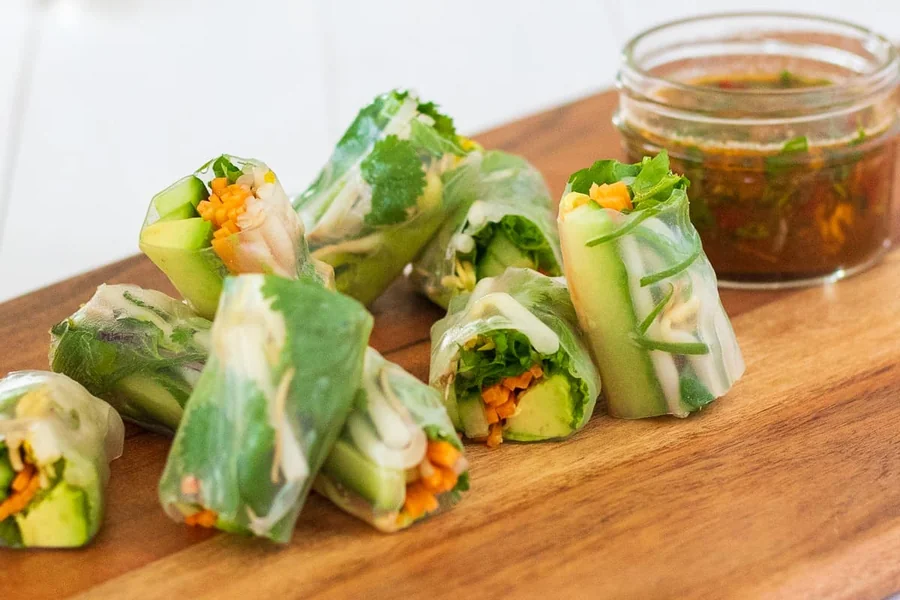
After learning how to make rice paper, you can play with it in numerous imaginative ways. The most popular one is fresh rolls, stuffed with vegetables, herbs and protein to make a light meal.
Rice paper may also be used to make dumplings or wraps. It replaces the normal dough in most recipes.
To achieve a crispy texture, fry or bake the sheets. This makes a crunchy snack or appetizer that is highly satisfying.
Another excellent choice is desserts. Load the sheets with fruits, chocolate or coconut to make simple and refreshing snacks.
The homemade rice paper provides you with the liberty to experiment and make dishes that are in your taste and style.
Final Thought
It is not a difficult but a satisfying task to learn how to make rice paper at home. With simple tools and materials, it enables you to make a versatile and new ingredient. Although the technique might require some practice before mastering it, it becomes easier with time. Homemade rice paper can be an invaluable addition to your cooking routine, with patience and creativity.
FAQs
How to make rice paper at home easily?
You can make it by mixing rice flour and water into a thin batter, cooking it into thin sheets, and drying them.
Do I need a steamer to make rice paper?
No, you can use a non-stick pan as an alternative to a steamer.
Why is my rice paper too thick?
It may be due to a thick batter or uneven spreading during cooking.
How long does rice paper take to dry?
It usually takes several hours depending on airflow and humidity.
Can I use homemade rice paper immediately?
Yes, it can be used fresh, but drying allows longer storage.
How should I store rice paper?
Store it in an airtight container in a cool, dry place.
Can rice paper be fried after making it?
Yes, it can be fried or baked to create a crispy texture.
