

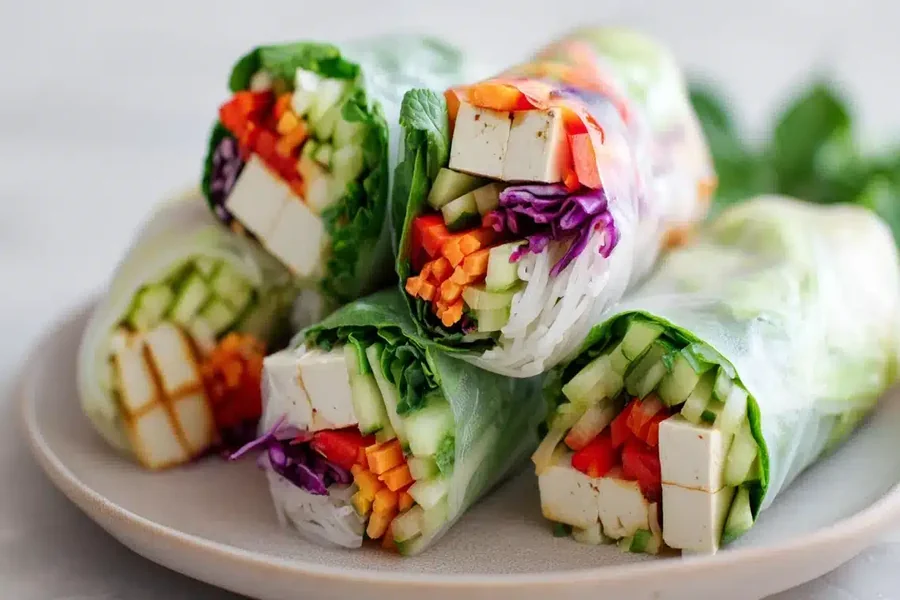
What Is Rice Paper and Why People Ask About Its Health
Rice Paper Healthy is a popular query among those who desire to eat healthier and cleaner yet still delicious meals. Rice paper is a thin, edible sheet usually composed of rice flour, water and occasionally tapioca starch. It is commonly employed in Southeast Asian food particularly in fresh rolls and light wraps.
The increasing popularity of healthy eating has popularized rice paper across the world. Citizens are seeking alternative to bread, pastry, and fried wrappers, and rice paper tends to be an appropriate choice. It is attractive at first sight due to its simple ingredient list and low-fat content.
Nevertheless, to comprehend whether it is really healthy it is necessary to look further than its basic ingredients. Its application, which foods it is used with, and cooking methods all contribute to its nutritional value.
Nutrition of Rice Paper
The rice paper is usually free of fat and has a moderate level of calories. Carbohydrates are commonly the primary nutrient contained in a single sheet, as it is composed mainly of rice. It is quite low in protein, and nearly free of fat itself.
Due to this fact, rice paper is mostly regarded as a light base, but not a whole food. It is not a good source of a variety of nutrients on its own, but it is a good encasing on healthier fillings.
The next fact to be mentioned is that rice paper is normally gluten-free. This ensures that it is a good choice to individuals with gluten intolerance or people that like gluten-free diets. It is also simple to chew on thus contributing to its popularity among those who prefer light, gentle meals.
Nevertheless, one should keep in mind that rice paper is not a balanced nutritional source. It must be always used in combination with other items in order to form a polnac meal.
Healthy Rice Paper
Low fat content is one of the significant advantages of rice paper. Rice paper is low in fat as opposed to many traditional wrappers, which are fried or cooked in butter or oil. This is why it can be recommended to those who are attempting to cut the amount of fat in their diets.
It is also not that high in calories, which can aid in portioning and weight control. It can be combined with fresh vegetables and lean protein to create a satisfying meal without superfluous calories.
The other advantage is that it is simple. Rice paper contains very few ingredients and does not contain many additives and preservatives that are present in processed foods. This renders it a healthier choice among those who are inclined to natural ingredients.
The other advantage is that it is gluten-free. It is quite difficult to locate an appropriate alternative to products containing wheat, and rice paper is a convenient solution.
Also, rice paper is conducive to portion awareness. Because the sheets are thin and not too large, it promotes the consumption of small portions and not excessive consumption.
The possible disadvantages and considerations
Although there are various advantages of rice paper, it is not flawless. The lack of protein and fiber is one of the key disadvantages. By itself, it lacks sufficient nutrients to keep you full of energy.
The other issue is its carbohydrate value. Being prepared of rice, it may elevate blood sugar levels in case of overconsumption. Individuals who control sugar levels must be aware of the size of portions and combine it with foods that are rich in protein and fiber.
Rice paper dishes are also prepared in a manner that is crucial to their health. To illustrate, the frying of rice paper may add a lot of fat and calories. Likewise, it can be lowered by adding sugary or salty sauces, which may decrease its health value.
Relying on rice paper also as a nutritious label is also a risk. The fact that it is light does not imply that all dishes prepared using it are necessarily healthy.
Rice Paper Meals: How to Make them Healthier
The trick to turning rice paper meals into healthy is in the fillings and ways of preparation. Begin with adding different kinds of fresh vegetables including lettuce, carrots, cucumbers and herbs. These are sources of fiber, vitamins and minerals.
Add some source of protein such as chicken, shrimp, tofu, or beans. Protein will make you full and your muscle will be fine. The addition of rice paper to the protein and vegetables makes the meal more balanced.
Select more healthy ways of cooking. The best choice would be fresh rolls in case you do not want to consume many calories. Air-frying or light pan-frying is preferable to deep frying, should you desire cooked versions.
Take note of sauces. Use lighter dips or home made dips with less sugar and salt. This will ensure the nutritional balance of the meal as a whole.
The amount of food eaten is also important. It is healthier to eat more than one roll with proportionate fillings than eat large portions of rice paper with little nutrients.
Comparison to Other wrappers: Rice Paper
Rice paper is usually less caloric and fatty than bread or tortillas. This makes it a lighter choice of wraps and rolls.
Rice paper is obviously more healthy, particularly when fresh, compared to fried wrappers. It does not entail the extra oils and heavy textures of frying.
But whole grain wraps can be more fiber and nutrient-rich than rice paper. It implies that rice paper does not necessarily become the most nutritious, yet it is frequently the less heavy.
The most appropriate option is based on your objectives. Rice paper can be used in case you are going to eat something gluten-free and low-calorie. Other options can be more suitable in the case you are seeking more fiber.
Final Thought
The question of whether rice paper is healthy or not depends on your usage. It is an ingredient on its own and is light and simple with low fat and moderate calories. Nevertheless, it lacks a nutritional profile on its own. It may be included into a healthy and nutritious meal when combined with fresh vegetables, lean protein, and healthy cooking techniques. It is important to pay attention to the whole meal and not the wrapping.
FAQs
Is rice paper healthy for weight loss?
Yes, it can support weight loss when used with low-calorie, nutrient-rich fillings and proper portion control.
Is rice paper better than bread?
It is lower in calories and fat, but bread may provide more fiber depending on the type.
Does rice paper have protein?
Rice paper contains very little protein and should be paired with protein-rich foods.
Can rice paper raise blood sugar levels?
Yes, it can raise blood sugar due to its carbohydrate content if eaten in large amounts.
Is rice paper gluten-free?
Yes, most rice paper is naturally gluten-free, but checking labels is recommended.
Is fried rice paper still healthy?
Frying adds extra fat and calories, making it less healthy than fresh or lightly cooked options.
Can you eat rice paper every day?
Yes, but it should be part of a balanced diet with varied nutrients.
